
Lately there’s been a lot of gum-flapping about “music piracy”. The RIAA has put out DVD’s containing lavishly-produced infomercials about the evils of file-sharing and the story of
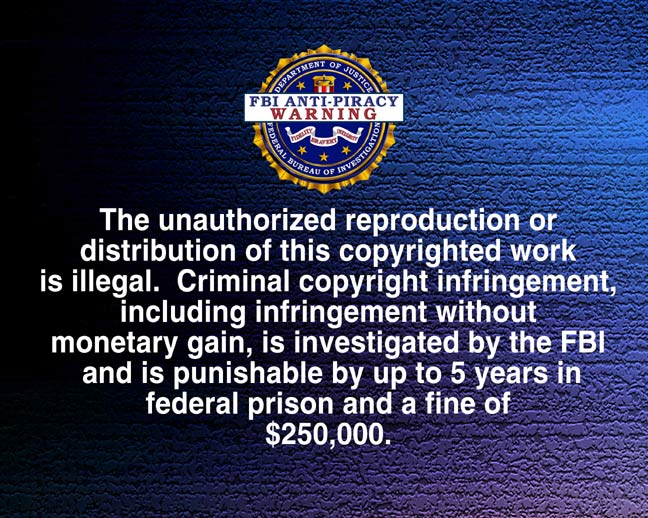
The Kid Who Got Caught who now has to spend the rest of his life flipping burgers to pay his legal bills and fines. Each new major-label release comes festooned with a conspicuous FBI Anti-Piracy Warning (on one such release, the performer printed a disclaimer: “The artist does not endorse the message shown below”). Never mind that traditionally it’s the major record labels themselves who routinely take money out of the pockets of musicians. But I digress.
By now, we’re all familiar Apple placing “digital rights management” (DRM) crippleware into music that it sells via Itunes as well as with SONY and their criminal invasion of innocent customers’ computers with malicious “rootkit” software which they said was only meant to - you guessed it - CURB PIRACY. (Whatever happened to “two wrongs don’t make a right”?) It’s a jihad against fair use and even common sense, and we music consumers are
THE ENEMY. How did we come to such a state of affairs? What’s going on here?
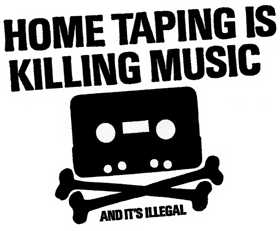
Back in the early 80's, cassette gear was really getting popular, largely thanks to SONY’s Walkman series of earphone-based portable cassette players, the granddaddies of the Ipod. Back then in those oh-so-analogue days, people would transfer their record collections to tape in order to listen to them on the go. Sometimes they’d tape copies of their albums for their friends which, whether the alkaloid-powder-enhanced record wonks acknowledged it or not, is how many people learned about new bands and different kinds of music. Then as now, commercial radio was too concerned with ratings and advertising to be bothered with breaking new music, at least not without the imprimatur of the major labels. Not to be denied their virtual monopoly power, the record company wonks swung into action. “Home taping is killing music, and it’s illegal!” trumpeted full-page ads in music magazines and on the backs of records, accompanied by a stylized Jolly Roger showing a cassette tape above the traditional crossbones. The record conglomerates attempted, with limited success, to charge customers a “tax” on tape decks and blank tapes, money to be paid directly to the record companies for music which consumers were presumably going to “pirate” using those items.
Skip ahead to the mid-90's. Along comes this kid Shawn Fanning and his new invention, a peer-to-peer file sharing site called Napster. It’s a pay site now, but back then it functioned a lot like Kazaa, Gnutella or Limewire. The major labels rallied their designer-suited troops just as they did in the early 80's. “Piracy! Theft!” the record executives all shouted when pressed on the subject. “Our jobs! Our limos! Our $500.00 lunches!” they whined softly to each other in private. The labels through their cartel, the RIAA, decided that Napster
had to be stopped at all costs, and so the litigation began. This despite the fact that while Napster was going full-tilt, CD sales were actually
UP - that’s right, up, by 4% as compared to before Napster’s arrival. According to PC Magazine’s
John Dvorak, file-sharing services like the old Napster were proving to be
excellent promotional vehicles. Peer to peer services also have the advantage of not being governed by the whims of media conglomerates who don’t know enough to get out of their own way (or as a friend once put it, “How come I can download David Bowie’s latest single on Limewire, but I can’t hear it on the radio?”). Before the shutdown of the old Napster, independent bands were actually using it to get their music out to potential audiences. After the shutdown of Napster, CD sales dropped by almost HALF. Was this what the record conglomerates were really shooting for?
To further illustrate my point: Several years ago, a friend shared one of his new CD’s with me. He did it the old-fashioned way, by sending me an audio cassette of it. That tape stayed in my car’s stereo for over a month. It was that good! So I searched out more releases by that group. In all, I bought 5 titles by that band. Net loss to the band - one sale. Net gain to the band - 5 sales. Who came out ahead in that deal? And if my friend had not “pirated” me their first album, I never would have even known that they even existed and never bought ANY of their releases, in which case: net loss to the band - one less fan.
Why do people still use the peer-to-peer networks? Why risk an unwanted visit from
The Men In Black Who Know Everything About Everything That You Do? Well, it’s because the paid download sites are essentially virtual mall record stores. Paid download sites, having none of the space limitations common to stores, are free to host many more selections than a real-world store. Just the same, there are hundreds of songs by obscure or forgotten artists which will never be available on the paid sites. There are unreleased recordings which will never see the light of day except via peer-to-peer. While technology has moved by leaps and bounds, the whims of radio programmers, music marketers and focus groups remain just as intractable as ever. As long as things stay this way, there will always be an “underground” music economy.
For the record (also available on cassette and CD), I believe that downloading and sharing commonly-available commercially-released music is a waste of time and bandwidth. I would much rather use the web to explore music that hasn’t been overpromoted and overplayed. There are independent artists who post their music on sites like Garageband.com and Myspace. Unlike the major labels, these bands very much want people to download their music, not because they’re being charitable, but because they know full well that their chances of being played on Clear Channel radio or showing up at a mall chainstore are somewhere between nil and zip. The Web is the only kind of “broadcast exposure” they can hope for. Sure, a lot of them suck, but hey, so does plenty of major-label product, right? You have to “dig” for the good stuff just as you would if you were pawing through a bin full of vinyls or a shelf full of CD’s. The reward is finding music that you didn’t know you couldn’t live without until you found it.